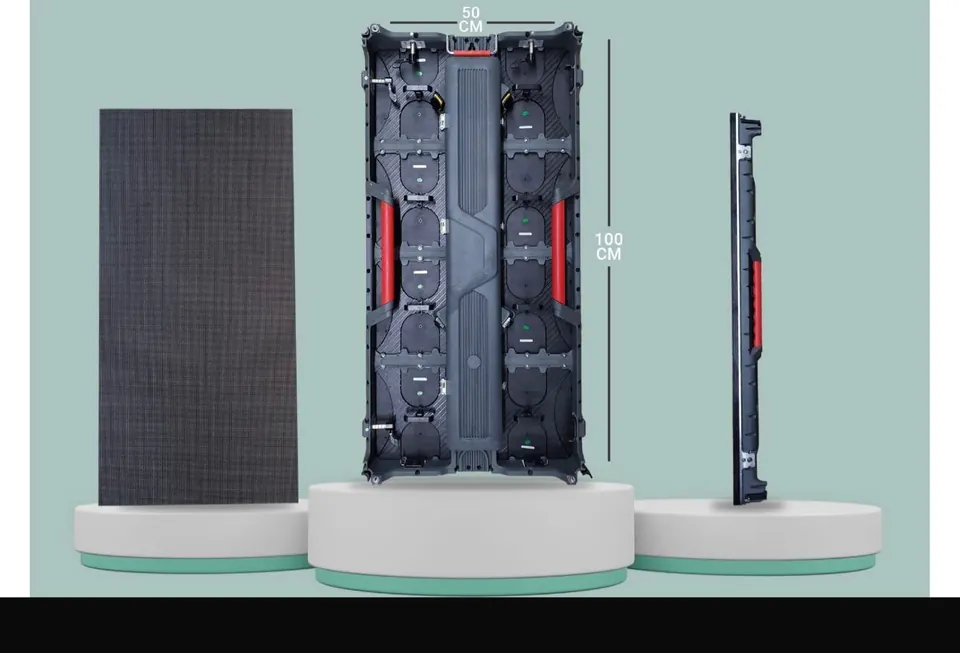
A CNC LED cabinet is the display body that carries the LED modules, receiving card and power supplies, cut to size by CNC or laser. Cabinet size is a multiple of the module size: with 320 × 160 mm NXTIONSTAR modules, bodies grow in 32 cm and 16 cm steps. ARLEDSCREEN chooses cabinet type and size on survey based on the screen surface, indoor or outdoor use and service side; cabinet pricing is on quote.
Short answer: A CNC LED cabinet is the display body that carries the LED modules, receiving card and power supplies, cut to size by CNC or laser. Cabinet size is a multiple of the module size: with 320 × 160 mm NXTIONSTAR modules, bodies grow in 32 cm and 16 cm steps. Cabinet type and size are chosen on survey; cabinet pricing is on quote.
LED cabinet types by material
Steel (cold-rolled sheet) cabinet: CNC or laser cut, bent and oven-painted. Low cost but heavier; common in fixed installations and P2.5–P10 screens. Aluminium cabinet: machined from sheet or profile; lighter than steel, rust-free, with fan-door versions for outdoor use. Die-cast aluminium and magnesium-alloy cabinets: cast in a mould and finished by CNC; tight tolerances and gap-free joins. Preferred for indoor fine-pitch screens and rental systems.
Standard LED cabinet sizes
For steel CNC cabinets the most common body on the market is 96 × 96 cm, holding 18 modules of 32 × 16 cm in a 3 × 6 layout. Small screens and signs use 64 × 48 cm (6 modules), 64 × 64 cm and 96 × 48 cm; strip-type screens use long bodies 16 cm high. The series runs in 32 × 16 cm steps up to 256 × 128 cm. Die-cast sizes are given in millimetres: 640 × 480, 640 × 640 and 320 × 480 mm for indoor fine pitch; 500 × 500 and 500 × 1000 mm for rental and stage systems; 960 × 960 mm outdoors. Portrait cabinets such as 64 × 192 cm for poster LED screens are a separate group.
Indoor vs outdoor cabinets
Indoor cabinets are thinner and mostly front-serviced: modules are held by magnets and removed with a vacuum tool, so the screen can sit flush on a wall. Outdoor cabinets are gasketed, covered and ventilated against rain and dust; rear service is common, and fan cooling is planned on sunlit façades. Double-sided cabinets are built for poles and corners seen from two directions.
How to choose a cabinet
First set the total screen size and pixel pitch, then pick the cabinet size that divides that surface with the fewest filler parts. Service side (front or rear), space in front of the wall, steel structure load, fixed or rental use and single or double face settle the choice. ARLEDSCREEN makes this choice on survey; cabinet, modules, control system and installation are in one quote.
LED cabinet price
Cabinet price depends on material, size, quantity, service side and details such as gaskets and paint. We do not publish list prices for cabinets; pricing is on quote. LED panel prices are published on our LED display price page.
LED display cabinet types and standard sizes
Cabinet type
Material
Size (mm)
Use
Price
Steel CNC cabinet (standard)
Cold-rolled steel, oven-painted
960 × 960
Indoor / outdoor
on quote
Steel CNC cabinet (small screen / sign)
Cold-rolled steel
640 × 480 · 640 × 640 · 960 × 480
Indoor / outdoor
on quote
Strip-type steel cabinet
Cold-rolled steel
960 × 160 … 2560 × 160
Indoor / outdoor
on quote
Large steel CNC cabinet (32 × 16 cm step series)
Cold-rolled steel
1280 × 960 … 2560 × 1280
Indoor / outdoor
on quote
Aluminium cabinet with fan door
Aluminium
960 × 960
Outdoor
on quote
Die-cast cabinet (fine pitch)
Die-cast aluminium
640 × 480 · 640 × 640 · 320 × 480
Indoor
on quote
Die-cast rental cabinet
Die-cast aluminium
500 × 500 · 500 × 1000
Indoor / outdoor
on quote
Die-cast cabinet (outdoor)
Die-cast magnesium alloy
960 × 960
Outdoor
on quote
Poster cabinet (portrait)
Steel, magnetic module seats
640 × 1920 · 640/960 × 1600–1920
Indoor
on quote
What is the most common LED cabinet size?
For steel CNC cabinets, 96 × 96 cm is the most common body and holds 18 modules of 32 × 16 cm. For indoor fine pitch, 640 × 480 mm die-cast cabinets are common; rental systems use 500 × 500 and 500 × 1000 mm.
Steel or aluminium cabinet?
Steel is more economical but heavier and is fine for fixed installations. Aluminium and die-cast cabinets are lighter, rust-resistant and more precise; they suit fine pitch, rental and weight-sensitive façades.
How much does an LED cabinet cost?
We do not publish fixed list prices for cabinets; we price on quote based on material, size and quantity.
Related guides
Outdoor LED — IP65 façades, DOOH and high-nit outdoor screens.
Indoor LED — Fine-pitch lobby, studio and corporate indoor screens.
Poster & totem — Vertical poster LED and digital totem solutions.
Share screen size, pixel pitch and mounting location; we'll propose a cabinet type and send a quote.
Published USD prices for 12 panel models (e.g. P1.25 GOB 115.06 USD) are on our price list. VAT included; freight/installation excluded; no free shipping.