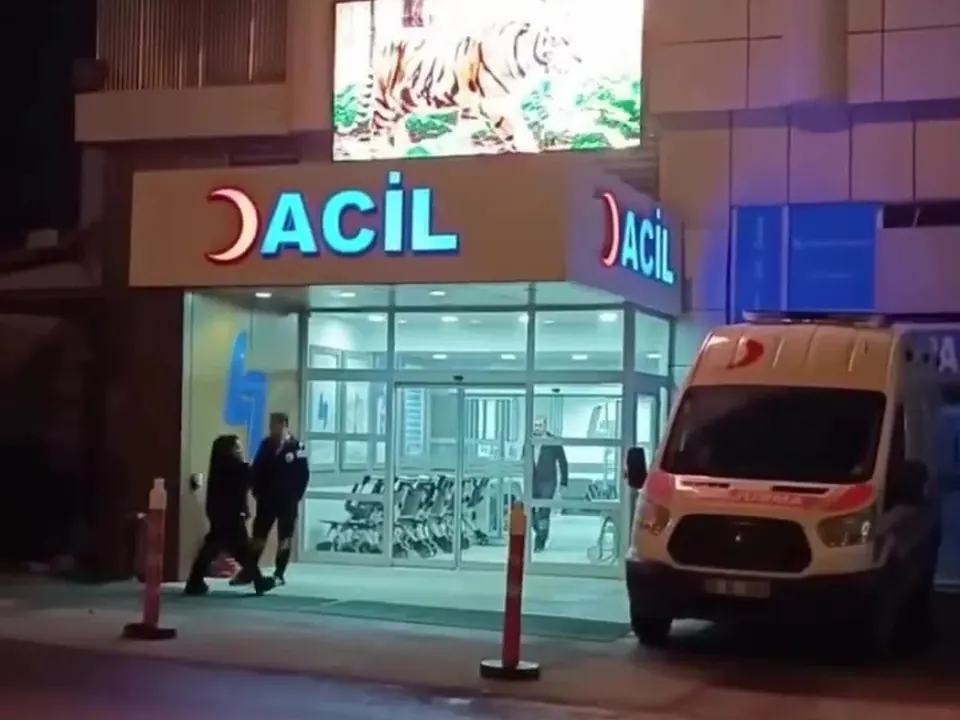
Hospitals use digital screens in five places: queue numbers and information in waiting rooms, doctor and queue details at clinic doors, wayfinding in the entrance lobby, notices in cafeterias and corridors, and outdoor screens on the façade and emergency entrance. LCD suits doors and small waiting areas; LED, which grows by adding modules, suits large waiting halls, lobbies and façades. In March 2026 we completed a 16 m² LED screen project for Lokman Hekim Hospital.
Short answer: Hospitals use digital screens in waiting rooms, at clinic doors, in the entrance lobby, in cafeterias and corridors, and on the façade and emergency entrance. LCD suits doors and small waiting areas; LED, which grows by adding modules, suits large waiting halls, lobbies and façades. In March 2026 we completed a 16 m² LED screen project for Lokman Hekim Hospital.
Waiting rooms and queue systems
A queue screen shows the output of the hospital's queue software; an LED or LCD screen receives it from a PC or media player. A single LCD is enough for small waiting areas; large halls read from more than 6 m benefit from indoor P2.5 (USD 38.62 per panel) or P3.07 (USD 37.06 per panel) LED for a bigger, readable surface. The queue software and connection are agreed at the survey.
Clinic doors and room screens
Doctor name, room number and next patient are shown on small LCD screens beside the door. Their size and price are given in a written quote.
Entrance lobby and wayfinding
Freestanding poster LED or totem screens show floor plans, department directions and notices; a touch kiosk lets patients search for their department. These are priced by quote.
Façade and emergency entrance
Façade and emergency-entrance screens use outdoor P4 (USD 40.56 per panel) or P5 (USD 35.88 per panel) modules. Night brightness can be set so it does not disturb the surroundings.
Payment, delivery and service
Installment payment is available, and we accept TL, USD, EUR and other currencies. Our products are CE certified. Delivery takes 3–21 days of preparation + 1–14 days of shipping. Besides LED screens we also repair LCD screens and kiosks, and we have completed projects in every Istanbul district.
Hospital screens by area (prices per panel, VAT included; shipping and on-site installation excluded)
Area
Suggested screen
Viewing distance
Price (USD/panel)
Small waiting area
LCD screen
2–5 m
on quote
Large waiting hall (queue screen)
Indoor P2.5 / P3.07 LED
6 m and more
38.62 / 37.06
Clinic door
Small LCD screen
1–3 m
on quote
Lobby and wayfinding
Poster LED, totem or kiosk
1–5 m
on quote
Façade and emergency entrance
Outdoor P4 / P5
8 m and more
40.56 / 35.88
LED or LCD for a hospital waiting room?
LCD is enough for small waiting areas. Large halls and lobbies read from a distance benefit from indoor P2.5 (USD 38.62 per panel) or P3.07 (USD 37.06 per panel) LED.
How does a queue screen work?
The screen shows the hospital's queue software output via a PC or media player. The software and connection are agreed at the survey.
What is used for hospital wayfinding?
Freestanding poster LED, totems or touch kiosks in the lobby. They are priced by quote.
Have you done hospital projects?
Yes. In March 2026 we completed a 16 m² LED screen for Lokman Hekim Hospital, and in July 2025 a high-resolution LED screen for Umut Radyoloji in Van.
Do you provide service if something fails?
Yes. Besides LED screens we repair LCD screens, kiosks and menu boards. ARLEDSCREEN offers a 2-year warranty and 5 years of free technical service.
Related guides
LCD display — LCD vs LED, and LCD menu board / freestanding options.
Kiosk display — What a kiosk display is, where it is used and how to choose one.
Poster & totem — Vertical poster LED and digital totem solutions.
Share photos of the waiting rooms, lobby and façade and the queue software you use; we will suggest LED or LCD and a budget for each area.
Published USD prices for 12 panel models (e.g. P1.25 GOB 115.06 USD) are on our price list. VAT included; freight/installation excluded; no free shipping.